
How to collect residential painting deposits
Define what each payment covers, when it is due, and how it counts toward the job total. A practical checklist for residential painting contractors.

A deposit can hold a place on the schedule and help cover the early costs of a job. It also raises questions for the homeowner: How much is due? What does it cover? When does the rest get paid?
Answer those questions before the job starts. Put the deposit and the full payment plan in writing, explain each step, and keep the payment attached to the job.
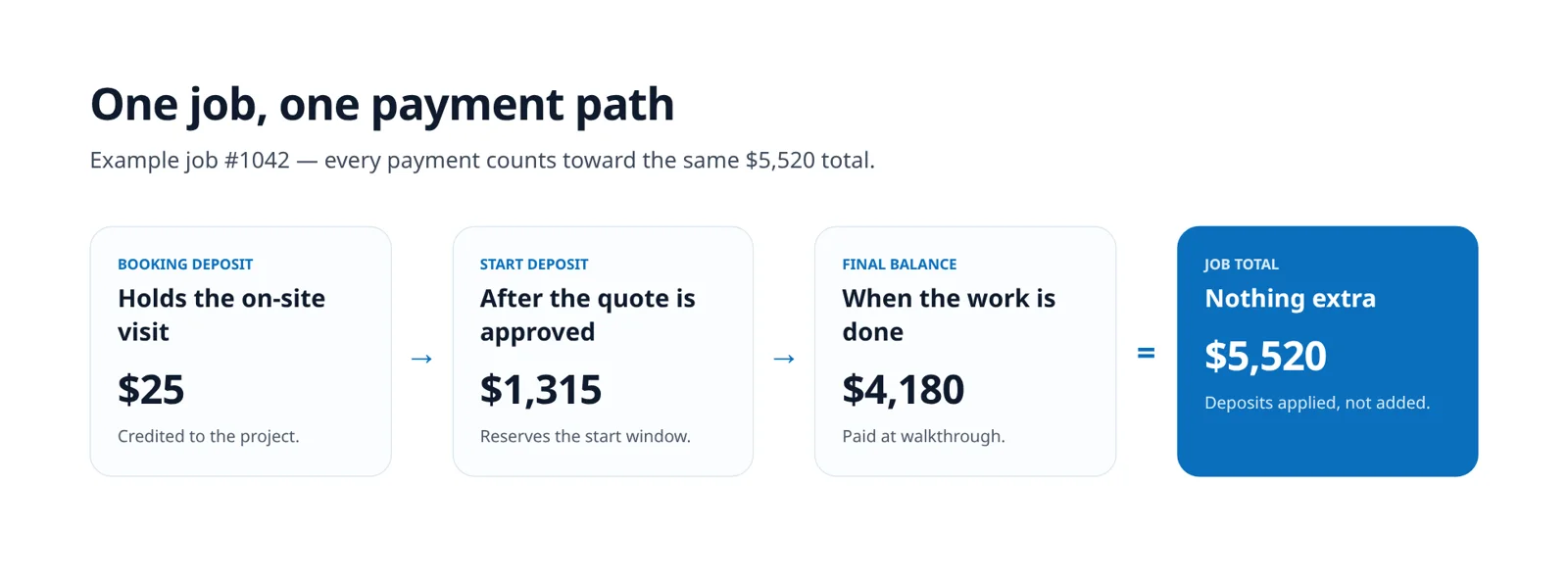
Start with the job costs and your local rules
There is no one deposit amount that fits every painting job. The right amount depends on the job, the materials you need to buy, your company’s process, and the rules where the work takes place.
Some states limit how much a contractor can collect before work begins. The FTC advises homeowners to check state and local rules because those limits vary. Before setting your deposit policy, check the requirements for the state and city where you work, and make sure your contract follows them.
What to search on Google to find your rules (replace the brackets with your state or city):
[your state] home improvement contractor deposit limit[your state] contractor down payment law[your state] home improvement contract requirements[your state] attorney general home improvement[your city] contractor license requirementsPrefer results from your state attorney general, consumer protection office, or contractor licensing board (usually .gov sites).
Use the deposit to cover a clear early commitment, such as reserving the start date or buying materials for the approved scope. Set an amount you can explain. Do not choose a percentage just because another contractor uses it.
Put the payment plan in the written quote or contract
A homeowner should be able to see the complete price and know when each payment is due. Include:
- The total approved price
- The deposit amount and due date
- What the deposit applies to
- Any later progress payment and what work it corresponds to
- The final balance and when it is due
- Accepted payment methods and any applicable fees
- How changes to the scope affect the price and schedule
- The terms for cancellation, rescheduling, or refunds
The payment schedule should match the work and the contract. Some state rules require written payment terms and may limit deposits or payments before work is complete. Check the rules where the project is located before you use a standard contract.
For example, a written plan for a multi-day interior job might call for a deposit after the scope is accepted, a progress payment at a clearly defined work milestone, and the remaining balance after the final walkthrough. Set the amounts and due dates for that specific project, and confirm they fit your contract and local requirements. This is an example of how to describe the sequence, not a recommended schedule or deposit amount.
Collect the deposit after the agreement and scope are clear
Make sure the homeowner has accepted the written estimate or contract and understands the work before you request a start deposit. Follow any applicable cancellation periods and local collection rules. The agreement should identify the rooms and surfaces, prep, coats, colors, exclusions, and any choices still open.
Once the written agreement is accepted:
- Confirm the planned start window.
- Send the payment request with the amount and due date.
- Explain how the deposit will be applied to the job total.
- Confirm when the schedule is considered reserved.
- Record the payment and update the job status.
With the deposit recorded, you can plan the date. See how to schedule residential painting jobs and crews.
If you use a separate booking deposit to hold an estimate visit, explain that clearly. A visit deposit and a start deposit serve different purposes. Show whether each amount is refundable and whether it will be credited toward the project, consistent with your contract and local requirements.
Make the payment easy to understand
Keep the request short and specific. Avoid sending a payment link without context. If you charge a fee for a payment method, disclose it before the homeowner chooses that method and confirm the fee is allowed under applicable rules and your payment provider’s terms.
Your estimate for the interior repaint is approved. The start deposit is [amount], due [date], and will be applied to the project total. Once it is paid, we’ll confirm the start date of [date or window]. The remaining payments are listed in your approved estimate. Reply here if you have a question.
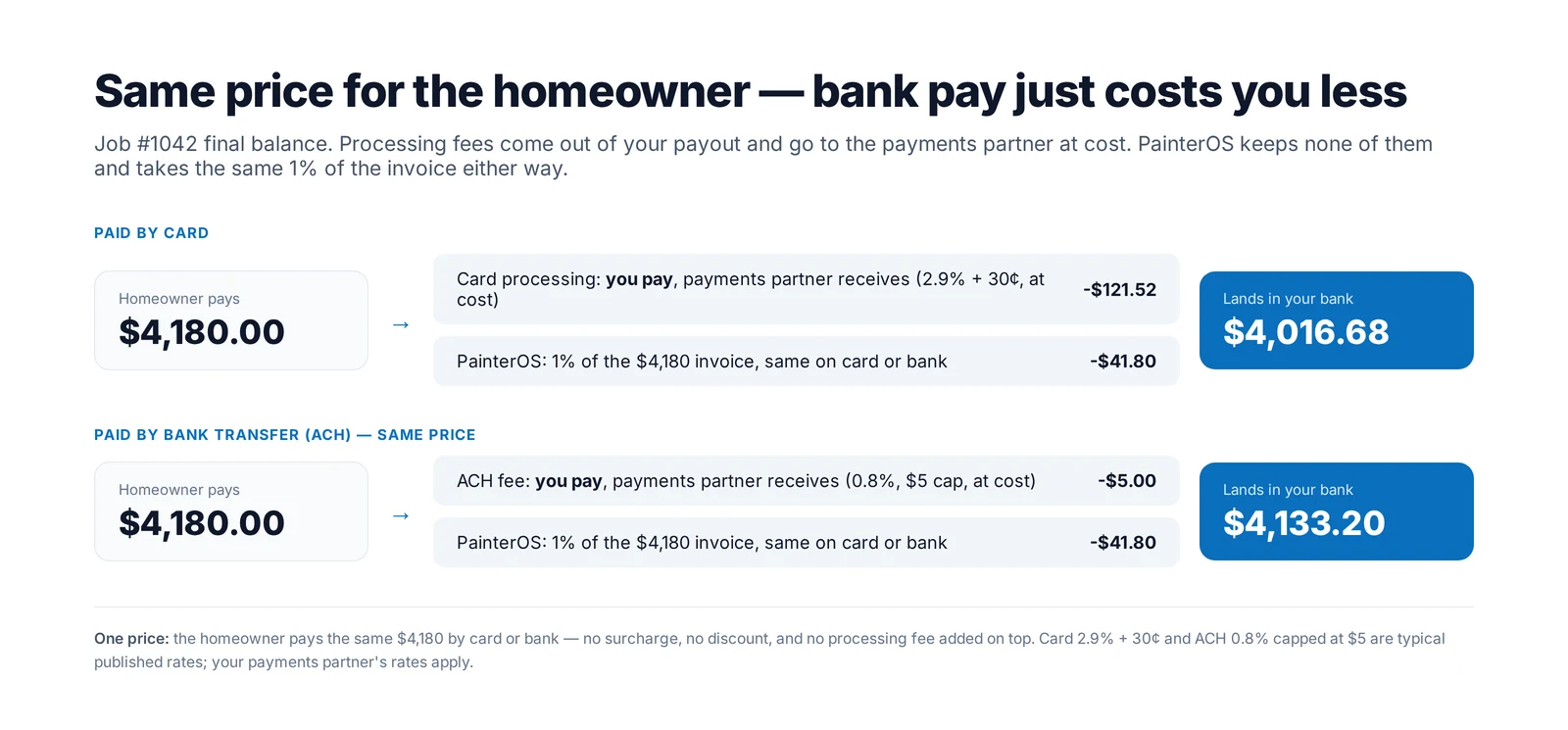
Keep payment processing charges separate from any fee charged by your software provider.
With dropcloth, the payments partner charges a processing fee on every payment: about 2.9% + 30¢ for a card, or 0.8% capped at $5 for a bank transfer (ACH). You, the contractor, pay that fee — it comes out of your payout, not on top of the homeowner's bill, and the homeowner pays the same price whichever way they choose. The payments partner receives it, passed through at cost; dropcloth keeps none of it. dropcloth takes the same 1% of the invoice amount however the homeowner pays — $41.80 on a $4,180 balance, card or bank.
Offer to save a payment method for the final balance
If your payment flow supports it, you can offer the homeowner the option to save a payment method for later. Keep that choice separate from paying the deposit. Saving a payment method does not, by itself, explain or authorize every future charge. Before the homeowner opts in, state whether you will send a payment request or charge the method after the job, when that will happen, and how you will calculate the amount, including approved changes. Only use automatic charging if your payment flow supports it and the homeowner has explicitly agreed to those terms.
If you send a payment request:
You can choose to save this payment method for future use. This is optional. When the work is complete, we’ll send you the final balance, including any changes you approved in writing, and you can choose how to pay.
If your payment flow supports an agreed automatic charge:
You can choose to save this payment method and authorize us to charge it for the final balance after the work is complete. The amount will be the remaining balance in your approved agreement, including any changes you approve in writing. This is optional. You can choose another payment method.
Use your connected payment flow to collect and save the method. Do not collect card details in a text message or store them in job notes. Keep a record of the homeowner’s permission and the terms they accepted.
Tie each payment to the job
When a deposit arrives, record it against the correct customer, property, and approved scope. Keep the amount, payment date, method, and remaining balance visible to the people who need them.
Before the crew starts, confirm the deposit is received if that is part of your written process. If the work or price changes, update the job total and payment plan after the change is approved. At completion, show the original price, approved changes, payments received, and final balance.
This avoids the end-of-job scramble of looking through bank alerts, texts, and invoices to work out what has already been paid.
Every payment belongs to the job
- Step 1 of 3
Agreed payment plan
Record the scope, milestones, amounts and refund terms in writing.
- Step 2 of 3
Payment received
Keep the date, amount and receipt against the correct job.
- Step 3 of 3
Balance updated
Subtract payments received from the current approved job total.
Deposits count toward the agreed total—not on top. Amounts and timing must follow your contract and local rules.
Avoid these deposit problems
- Collecting before the scope is clear. Confirm what the homeowner approved first.
- Making the deposit sound like an extra fee. Explain that it is applied to the job total, if that is how your contract works.
- Promising a start date you have not reserved. Say what must happen before the date is locked.
- Leaving refund or rescheduling terms vague. Put the applicable terms in the written agreement.
- Collecting more than your local rules allow. Verify requirements before setting a standard amount.
- Taking the full project price up front. The FTC cautions homeowners against paying the full amount before the work is done; structure payments around the job and follow your local requirements.
Keep the whole payment path clear
A deposit works best when it is one step in a payment plan the homeowner understands. Confirm the scope, write down the terms, collect the payment through a clear request, and keep the balance connected to the job through completion.
dropcloth keeps the inquiry, quote, start deposit, schedule, crew details, and final payment on one job record. See how the workflow works on a sample residential job.
Related: Painting estimate checklist: what to include before you send a quote.
Payment rules vary by location and contract type. This article is general business information, not legal advice. Check current state and local requirements before setting or changing your deposit terms. The Federal Trade Commission notes that some states limit contractor down payments: How to Avoid a Home Improvement Scam.
Keep reading

Painting Estimate Checklist: What to Include Before You Send a Quote
A walkthrough checklist for rooms, surfaces, prep, finish plan, exclusions, schedule and changes — so the homeowner and your crew see the same job.

How to Follow Up on a Painting Estimate
A four-step follow-up schedule with email templates, so every open quote has a clear next step without pressuring the homeowner.

How to Schedule Residential Painting Jobs and Crews
Confirm the job is ready, plan crew days from the work, give homeowners a start window you can keep, and handle changes from one current plan.