
How to Schedule Residential Painting Jobs and Crews
Confirm the job is ready, plan crew days from the work, give homeowners a start window you can keep, and handle changes from one current plan.

A painting job is ready for the calendar when you know what the crew is doing, who is doing it, what needs to be ready, and what you have promised the homeowner.
Start with the approved scope. Estimate the work by task, check crew capacity, confirm colors, materials, and access, then give the homeowner a realistic start window. If any of those pieces change, update the crew and homeowner from the same current plan.
1. Confirm the job is ready to schedule
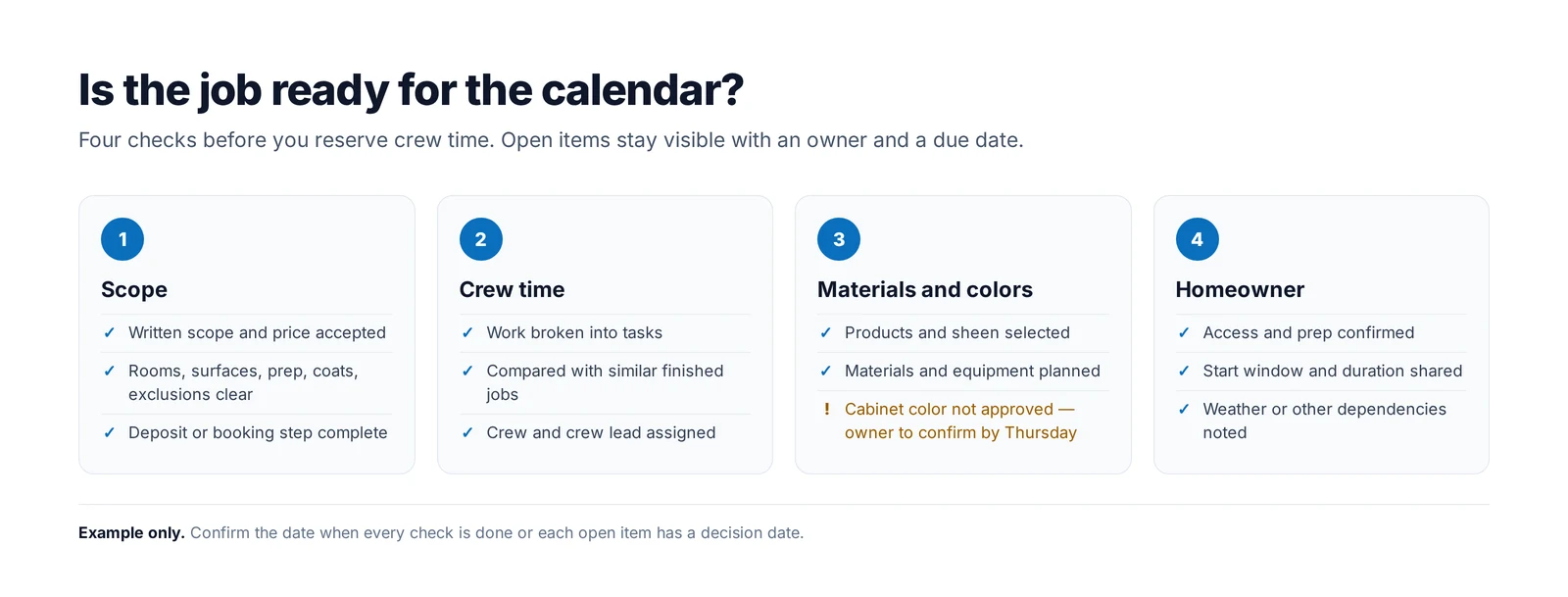
An accepted estimate is a good start. Before reserving production time, check the details that can still move the job:
- The homeowner accepted the written scope and price.
- Rooms, surfaces, prep, coats, and exclusions are clear.
- Colors, products, and sheen are selected—or have a decision date.
- Any deposit or other required booking step is complete.
- The homeowner has confirmed access and any preparation they are responsible for.
- Materials and equipment can be ready for the planned start.
- The right crew is available for the work.
Keep unresolved items visible. For example, “Cabinet color not approved; owner to confirm by Thursday” is more useful than treating the job as fully ready.
If you're still building the scope, start with the painting estimate checklist. For the booking step, see how to collect residential painting deposits.
2. Estimate crew days from the work, not just the room count
Two jobs with the same number of rooms can take very different amounts of time. Surface condition, prep, ceilings, trim, cabinets, repairs, coats, access, and drying time all affect production.
Break the work into tasks:
- Protect floors, furniture, and nearby surfaces.
- Complete the prep included in the scope.
- Prime where needed.
- Paint each area in a workable sequence.
- Complete detail work, touch-ups, and cleanup.
Estimate each task using your own crew’s experience. For example, compare the planned work with similar jobs your team has completed. After the job, record actual crew time and note what changed. Over time, your schedule gets grounded in how your painters actually work—not a generic production rate.
Include the work around painting too: loading, setup, moving between rooms, cleanup, and the homeowner’s access needs. Don’t plan a full day of production if the crew also needs time for a long drive or a complex setup.
3. Match the job to crew capacity
Before confirming dates, look at the whole week—not just the open space on one day.
Check:
- Which crew members are available
- Whether the job needs a particular skill or crew lead
- How long the work is expected to occupy that crew
- Travel between the previous job, this job, and the next one
- Materials, equipment, and any special orders
- Other jobs that may run long or depend on the same people
For a multi-day job, reserve the crew for the full planned sequence. If the work can be split across rooms or phases, make that plan clear to the crew and homeowner. Avoid filling every open hour; a schedule with no room for a delay can push several customers off course.
4. Plan the work in a useful sequence
Write down what the crew should complete each day or phase. The sequence may depend on which rooms the homeowner needs, how much furniture is in the way, product requirements, drying time, and whether other work is happening in the home.
For exterior painting, consider the forecast and the product’s application requirements when setting the plan. If weather could affect the start or completion date, explain that before the crew is on site and agree on how you’ll communicate changes.
A simple production plan could look like this:
| Day or phase | Planned work | Ready before crew arrives |
|---|---|---|
| 1 | Protect and prep living room and hallway | Furniture moved; repair scope confirmed |
| 2 | Paint living room and hallway; begin bedrooms | Colors and products on site |
| 3 | Finish bedrooms, complete touch-ups, clean up | Homeowner available for walkthrough |
This is an example of how to organize a job, not a production-time benchmark. Set the actual sequence and duration from your scope and crew’s experience.
Build the day around dependencies
- Step 1 of 3
Protect + prep
Access, furniture protection and surface repairs come first.
- Step 2 of 3
Prime + paint
Plan coats around product instructions and drying time.
- Step 3 of 3
Review + finish
Leave time for cleanup, homeowner review and touch-ups.
An example sequence, not a fixed three-day promise. Crew size, scope and site conditions change the plan.
5. Give the homeowner a clear start window
Tell the homeowner:
- The planned start date or arrival window
- The estimated duration
- Which areas the crew expects to work in
- Any access, parking, or preparation needed
- How you’ll share updates
- What could cause a schedule change
Use a window you can keep. If the crew needs to finish another job first, don’t promise an exact arrival time you cannot control. Make clear when the date becomes confirmed under your agreement and process.
6. Keep the crew on the current plan
Before day one, give the crew the information they need to start without calling the office for basics:
- Current room-by-room scope
- Prep and protection notes
- Approved colors, products, and sheen
- Site access and homeowner expectations
- Materials and equipment
- Planned work sequence
- A contact for questions
If the customer approves a scope change or the schedule moves, update the job plan and tell both the crew and homeowner. Mark old instructions as replaced so nobody follows an outdated version.
7. Handle schedule changes directly
Painting schedules move. A color decision may be late, a surface may need more prep, a crew member may be unavailable, or weather may interrupt exterior work.
When something changes:
- Identify which job dates and people are affected.
- Update the planned work and the next available dates.
- Tell the homeowner what changed and what you need from them.
- Notify the crew of the current plan.
- Record the reason and any new commitment.
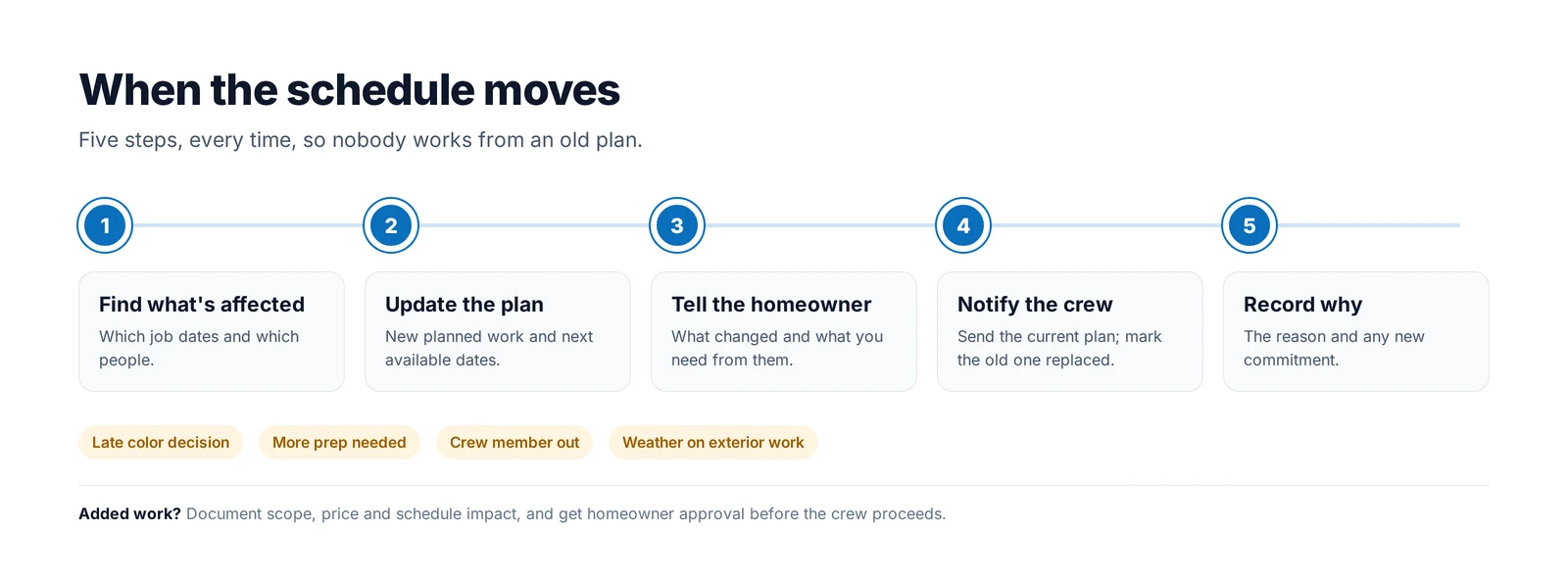
If the change involves added work, document the scope, price, and schedule impact and get homeowner approval before the crew proceeds. The painting change order template covers what to write down.
Residential painting schedule checklist
Use this before confirming a job:
- Written scope and price accepted
- Colors and products selected or decision dates recorded
- Deposit or required booking step complete
- Crew and crew lead assigned
- Work estimated from tasks and comparable completed jobs
- Materials and equipment planned
- Homeowner access and preparation confirmed
- Start window and expected duration shared
- Weather or other dependencies considered
- Crew has the current scope and work sequence
- Open items have an owner and due date
A good painting schedule connects the estimate to the people doing the work. When scope, colors, crew time, materials, and homeowner expectations stay together, it is easier to see what is ready and what could move the plan.
dropcloth keeps the quote, deposit, schedule, crew details, and final payment on one job record.
Keep reading

How to Collect Residential Painting Deposits
Define what each payment covers, when it is due, and how it counts toward the job total. A practical checklist for residential painting contractors.

Painting Estimate Checklist: What to Include Before You Send a Quote
A walkthrough checklist for rooms, surfaces, prep, finish plan, exclusions, schedule and changes — so the homeowner and your crew see the same job.

Painting Change Order: How to Price Extra Work and Get Approval
Write down what's changing, price it before the crew starts, note the schedule impact, and get the homeowner's approval before any extra work.